The Ins and Outs of Healing Gardens

By Jesse Grafton, PLA, LEED AP, Project Manager, Landscape Architecture
What are Healing Gardens and Where Can They Be Implemented?
Who doesn’t love a peaceful stroll through the woods, a picnic at the park, or a walk through your neighborhood to get outside, breathe fresh air, and reset yourself? This is a wonderful and routine part of life for most healthy people. However, when you’re in a hospital or outpatient facility, fresh air and exercise may be harder to come by. Enter, healing gardens. A healing garden can offer a place to rest, refresh, relax, and rejuvenate for patients on the road to recovery1. With an experienced and conscientious design team, strong communication, and a centralized location, wellness and healing gardens offer a multitude of benefits for all who use the space both directly and indirectly through borrowed views.
In this article, we will explore the many influences, considerations, and key design factors that make these outdoor environments so valuable as places for rest, reflection, and renewal.
The Benefits of Healing Gardens
Patients, healthcare workers, visitors, and even wildlife can all interact with healing gardens. While physically spending time in these spaces provides the greatest benefit, simply viewing nature can also have meaningful effects. Patients confined to their rooms or staff moving through a busy day can still experience measurable health benefits by seeing greenery, water, and natural light. Access to these views can promote relaxation, reduce stress, and support overall well-being for those who may not have the opportunity to fully engage with the garden. Studies have shown that people in hospitals with views of nature felt up to four times better than those with views of a wall. They also request less pain medication and engage more positively with staff.2.
For those able to step outside, healing gardens offer a deeper, more restorative experience. These spaces invite people to walk along shaded paths, share an outdoor meal, explore small moments of nature with children, or pause on a bench to clear the mind. Patients, visitors, and staff can stretch their legs, spend time with family, friends, or coworkers, or simply sit quietly and reconnect with their surroundings. Thoughtfully designed seating, accessible circulation, shade, and sensory planting allow people of different ages and abilities to comfortably engage with the space at their own pace.
Key Design Factors for Wellness Gardens
The Impact of Textures and Colors

Hardscape elements should work in harmony with landscape materials through thoughtful layering of materials and colors. Designers should not hesitate to explore options such as colored concrete or stamped patterns, which can achieve the visual character of more traditional materials while reducing long-term maintenance demands.
Healing gardens are intended to invite movement and exploration, so walkways and paths should be carefully integrated throughout the space. Paths should be wide enough to comfortably accommodate wheelchairs as well as pedestrians walking side by side, allowing people to stroll, converse, and move through the garden with ease.1
Ground plane materials should incorporate textures that provide adequate slip resistance while still maintaining smooth, safe transitions. Abrupt edges or material changes that could create tripping hazards should be avoided to ensure accessibility and comfort for users of all abilities.
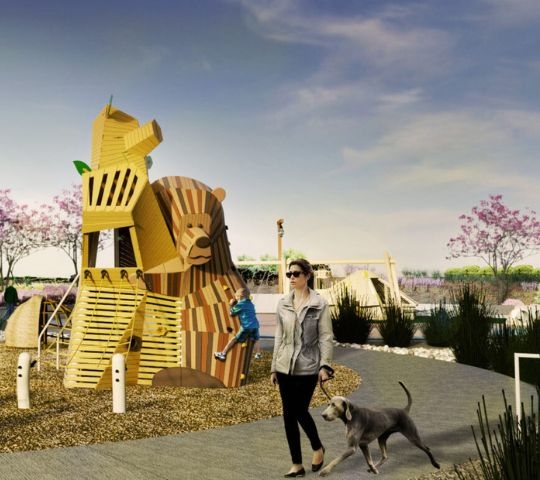
Where wellness gardens include areas for children or active recreation, materials such as rubber play surfacing or synthetic turf can help create safe, durable play environments that integrate with the broader landscape while minimizing maintenance requirements.
Balancing Natural Light Exposure with Shade
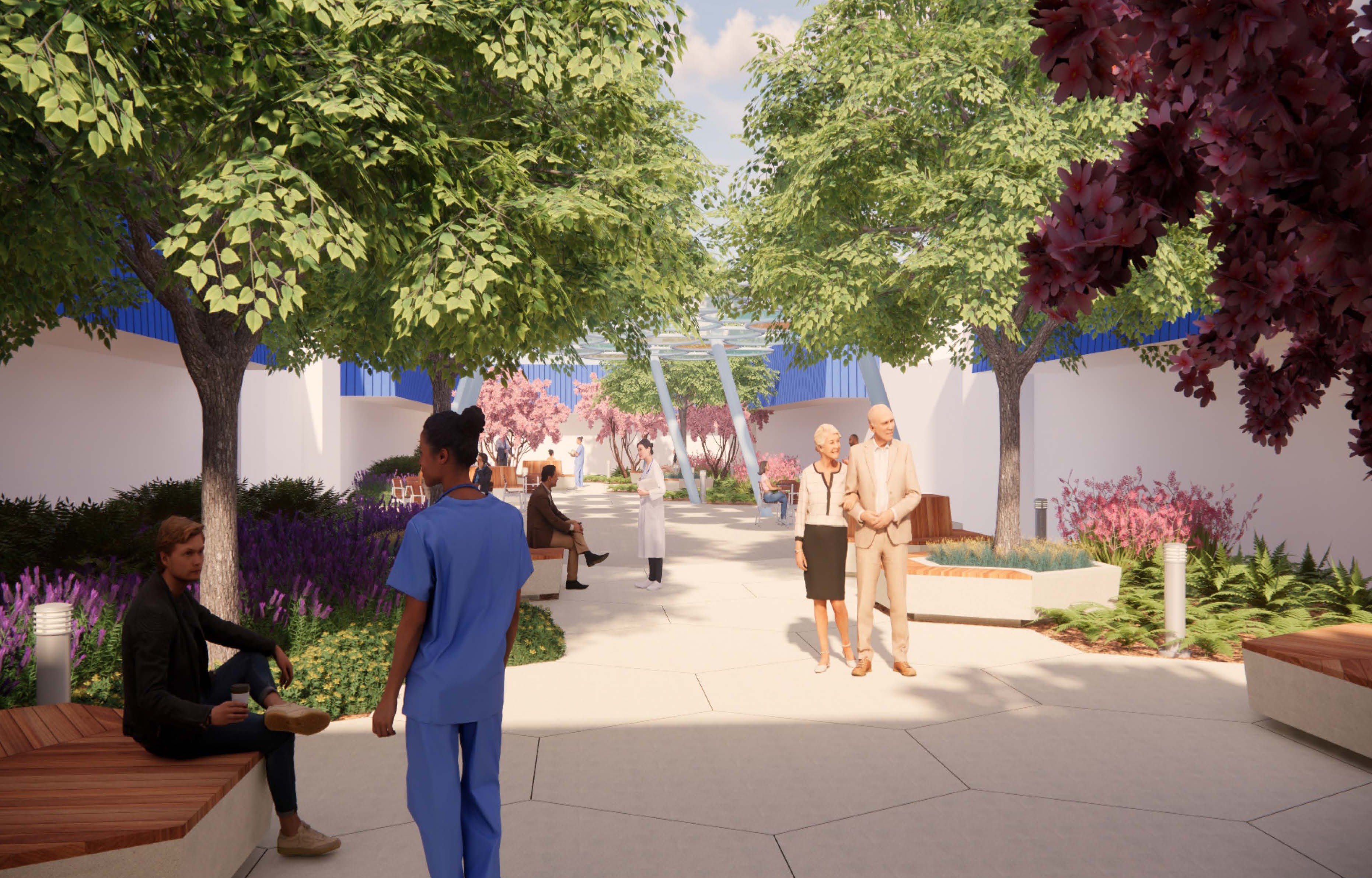
Trees used in healing gardens, particularly in tighter spaces, should be carefully selected and sized to fit the scale of the environment. They should provide meaningful shade while maintaining an open, airy canopy that allows dappled light and air movement to pass through the space. Adequate clearance from adjacent buildings is also important to protect both the structure and the long-term health of the trees. Deciduous species are often ideal, offering shade during the warmer months while allowing more sunlight into the garden during winter when leaves have dropped. Designing with near mature tree size in mind helps reduce the need for extensive future pruning and minimizes the potential for conflicts with building walls or windows.
In addition to a tree canopy, shade structures such as shade sails can provide layered and flexible shade throughout the garden. These structures are available in a range of opacities, allowing designers to fine-tune light levels to suit different user needs. Some patients may be directed to avoid direct sunlight while others may seek it out, so providing a mix of shaded and sunlit areas allows visitors to choose the environment that feels most comfortable.2
Careful coordination with the healthcare owner and potential other designers, such as the architect of record, is also important to address potential window glare or harsh reflected light from surrounding building surfaces. One strategy for managing light intensity is the use of fritted glass, which can be applied to both new and existing windows. Frit patterns help diffuse light, reduce glare, and can be customized with a variety of patterns that complement the visual character of the surrounding garden design.
Adding Lighting: Soft vs. Bright and Color-Changing LEDs
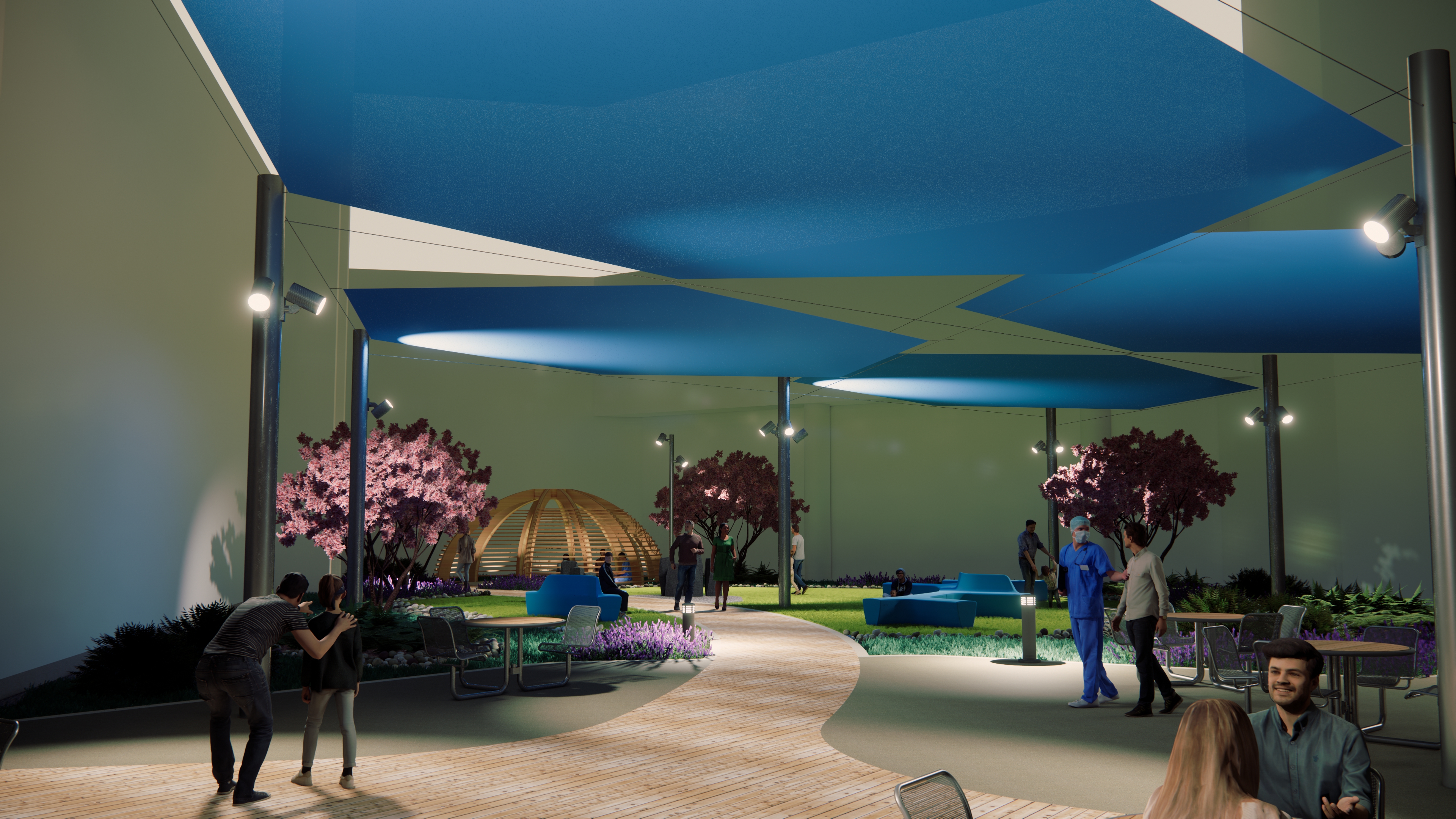
The versatility of LED lighting allows designers to select from a wide range of color temperatures, from warm to cool tones, as well as virtually any color combination. While this flexibility can feel overwhelming, the primary focus in wellness and healing gardens should be on safety and comfort, particularly during evening hours or in the darker winter months. Lighting should clearly illuminate paths, seating areas, and key circulation routes to support safe movement through the space.
Color can still play a thoughtful role within the design. Subtle color accents may be introduced for special events, seasonal recognition, or to highlight focal features within the garden without overwhelming the calming character of the environment. To maintain visual comfort and minimize light pollution, fixtures should incorporate cutoff shields that direct light only where it is needed, preventing glare and ensuring the garden remains a peaceful and welcoming space.
Adequate Air Movement: Enhancing User Comfort and Mitigating Swirling Winds
Wind movement should be carefully considered when designing healing gardens. Gentle breezes can provide natural cooling and enhance comfort, particularly in warmer climates, but stronger winds can swirl and become amplified within enclosed spaces, making areas uncomfortable and discouraging use. Thoughtful placement of trees and shade structures can help break up wind patterns above, while vegetated buffers, hedges, or permeable fence panels can disperse wind at ground level. When used strategically, these elements help create a calmer, more comfortable microclimate that encourages visitors to linger and enjoy the space.
Seating Variety: Companions and Flexibility for All Users
Healing gardens serve as versatile spaces where patients can visit with family, consult with physicians or nurses, or meet with visiting clergy.1 To support this range of activities, seating should be varied and flexible. A combination of backed and backless benches accommodates different preferences and needs, while armrests assist users transitioning from walkers or canes. Moveable chairs and tables further enhance flexibility, allowing the space to adapt to small groups, larger gatherings, or quiet reflection.
Material and color choices are also important for comfort and usability. Durable, low-maintenance materials ensure longevity, while lighter colors can help keep seating surfaces cooler in warmer climates. By thoughtfully combining variety, accessibility, and adaptability, healing gardens can create a comfortable, inclusive environment that supports the diverse needs of all users.
Help is Just a Call Away: Technical Features You Can’t Forget
Incorporating nurse call buttons on pedestals, bollards, or similar features within a healing garden provides patients with reassurance that assistance is readily available if needed. These elements enhance both safety and peace of mind, encouraging patients to use the outdoor space confidently. In addition, many site furnishings, including benches, chairs, and tables, now offer integrated device charging or connectivity options. This combination of safety and modern convenience supports a comfortable, connected, and accessible environment where patients, staff, and visitors can spend time outdoors with confidence.
Bird Mitigation: Deterring Unwanted Visitors
Birds can enhance a healing garden by adding interest and movement as they interact with plants and shaded areas, providing visitors with a subtle connection to nature. At the same time, they can become a nuisance if droppings interfere with pathways, seating, or other garden areas. Eco-friendly bird-mitigation strategies are available to manage bothersome species, including sound-emitting devices that mimic the calls of predatory birds. Careful placement of these devices, such as rooftop installations for enclosed courtyards, can help minimize noise disturbance for garden users while still limiting unwanted fowl in the space and maintaining its peaceful, restorative atmosphere.
Landscape Architects and Healing Gardens: A Perfect Partnership
Landscape architects play a pivotal role in pairing human needs with natural environments, regardless of the space's size. They value collaboration with like-minded professionals to enhance healing gardens, focusing on sustainable design, efficient water use, and low-maintenance solutions that perform well over time. Engaging a landscape architect at the onset of a project helps bridge client and user needs, fosters environmental awareness, and unifies the design team, resulting in outdoor spaces that are functional, restorative, and resilient for years to come.
Healing Gardens: A Call to Bring Nature Everywhere
Wellness and healing gardens provide patients, visitors, and staff with a place to breathe fresh air, move, pause, and reflect, all while supporting recovery, reducing stress, and restoring energy. Even brief views of greenery, whether direct or indirect, can calm the mind, while spending time outdoors allows people to reconnect with nature and with one another.
Now is the time to prioritize these spaces. Wherever possible, healing gardens should be included in hospitals, outpatient facilities, and public areas, giving all users the chance to pause, restore, and thrive. By embracing healing gardens, we create outdoor environments that nurture hope, resilience, and well-being for everyone who experiences them.
Sources; 1. https://www.hatcherlandscape.com/blog/landscape-design-ideas-healing-therapeutic-garden-medical-facility-hospital; 2. https://www.usa-shade.com/blog/guide-to-hospital-healing-gardens-and-landscape-architecture/
...
About the Author
Jesse Grafton, PLA, LEED AP, is a Landscape Architect with Westwood Professional Services, bringing close to 20 years of experience in creating meaningful and resilient outdoor spaces. He holds a Bachelor of Science in Landscape Architecture from Washington State University. A passionate plant enthusiast, Jesse deeply believes in the restorative power and purpose of gardens, both in his personal life and in his professional work. He enjoys being outdoors, cultivating bonsai, gardening with his family, and designing thoughtful healing gardens that foster connection, wellness, and a sense of place.