University Lakes Restoration Project

The University Lakes Restoration Project is a transformational effort in master plan implementation and open space planning, focused on restoring one of Baton Rouge’s most iconic natural landscapes while creating safer, more connected, and more inspiring public spaces. The plan addresses environmental decline, expands recreational opportunities, strengthens cultural identity, and fosters a healthier future for residents, LSU students, and visitors.
The Opportunity
The University Lakes have long been a recreational and cultural centerpiece for the city and capitol region. Still, decades of surrounding development, declining water quality, sediment buildup, invasive vegetation, bank erosion, and unmanaged stormwater runoff have led to the system’s deterioration. These conditions pose a threat to wildlife, diminish public enjoyment, and heighten safety concerns for pedestrians and cyclists. A comprehensive master plan was developed to address these challenges through a long-term vision that supports environmental health, public access, and community identity while incorporating resilient stormwater management strategies. That original vision was embraced by community partners, such as the State, the City/Parish, BREC, LSU, and others, who committed the necessary resources to begin master plan implementation. CSRS, a Westwood company, was selected in 2020 as part of a joint venture to manage the implementation on behalf of University Lakes LLC and a multi-jurisdictional Project Management Committee.
How the Vision Evolved
Initially constructed in the 1930s through federal relief programs, the Lakes transformed a cypress tupelo swamp into a defining civic amenity. Over time, the landscape became deeply tied to local culture, recreation, and ecology, which shaped the goals of the master plan. As community engagement, environmental studies, and technical analysis progressed, the vision broadened. It evolved from addressing water quality alone to creating a healthier, more resilient, more connected, and more educational landscape that reflects the history and ecology of South Louisiana. Guiding principles focused on healthy environments, healthy people, healthy culture, and healthy learning.
Challenges, and How We Solved Them
Advancing the vision set forth in the master plan and positioning the community for successful master plan implementation required significant coordination, including:
- Re-engaging with the community to confirm and refine the master plan’s initial recommendations.
- Performing technical due diligence to ensure a thorough understanding of existing conditions, to evaluate the construction feasibility of the master plan’s recommendations.
- Incorporating flood risk reduction into the design and function of the lakes’ restoration.
- Continuously seeking, securing, and managing additional funding needed to complete the implementation of critical path elements.
The activities above were all coordinated and managed by CSRS, which included helping the client procure and manage a diverse group of technical consultants and specialists. Ultimately, this deliberate approach generated four goals for the University Lakes Restoration Project implementation:
Lake Deepening for Long-Term Aquatic Stability
Over several decades, the University Lakes had become very shallow – an average depth of 2.5 feet when construction began – which degraded water quality and habitats and limited recreational opportunities. With limited resources, the focus of the implementation effort became deepening the lakes and constructing underwater forebays in key locations to trap sediment from runoff, so that the restored depths can be sustained over time.
Environmental Enhancement and Habitat Restoration
Shallow depths, stormwater pollutants, and invasive plants degraded water quality and natural habitat. Integrated stormwater management strategies, including lake deepening and living shorelines with native plantings, reduce pollutant loads and reinvigorate the littoral edge, improving habitat for fish, birds, and other wildlife.
Flood Risk Reduction for Surrounding Communities
By connecting the two largest lakes hydraulically and retrofitting an existing weir for active management, the project is unlocking the flood risk reduction potential of the University Lakes, protecting surrounding homes and infrastructure during heavy rain events.
Expanded Recreation and Improved Multimodal Safety
While the University Lakes are an extremely popular recreational amenity, actual recreational options had become somewhat limited, and the safety of pedestrians, cyclists, and motorists was a common concern, as was general connectivity to the surrounding communities. Through the University Lakes Restoration Project, key intersections are being improved for safety, new multi-use paths are being constructed with lighting and amenities, and new passive green spaces are being introduced, along with improved parking.
Innovation in Action
Innovation is a common theme running through the implementation of the University Lakes Restoration Project. Some examples include:
- Utilizing a combination of “wet” hydraulic and mechanical dredging, so that the lakes did not have to be drained in order to be deepened.
- Constructing underwater forebays to trap sediment, reducing the future maintenance burden, and sustaining the health of the lakes.
- Employing various strategies for the beneficial reuse of dredged material, such as creating living shorelines to filter runoff and improve habitat.
- Incorporating flood risk reduction into the greater restoration scope allowed the Project to access $10 million in federal mitigation funding.
- Managing $80 million in local, state, and federal funding to maximize the benefits of the project while maintaining compliance with each source’s requirements.
Services Delivered
The University Lakes Restoration Project incorporates a wide range of interdisciplinary services, including:
- Project management
- Grants management
- Design and construction management
- Procurement and contracting
- Hydrology and stormwater planning
- Environmental and permitting
- Community engagement
- Long-term stewardship strategy development
The Outcome
The University Lakes Restoration Project is now well into construction, having secured $80 million in funding. Currently, three of the six lakes have been completed, and two more are under construction, along with improvements to drainage and mobility infrastructure. The sixth and final lake will be improved as part of a FEMA-funded mitigation project secured in 2025, advancing long-term environmental resilience and wildlife habitat restoration.
Recognition
While still under construction, the project is already recognized as a leading example of environmental restoration paired with community-centered design.
To learn more, listen to the interview with Tim Barfield, SVP, Program Management, and Mark Goodson, Principal of Program Management, on Talk Louisiana with Jim Engster.
Project Overview
Client
University Lakes LLC, a wholly owned subsidiary of the LSU Real Estate and Facilities Foundation.
Location
Baton Rouge, Louisiana
Phase
Construction
Disciplines Involved
Project management, grants management, construction management, water resources, landscape architecture, transportation planning, community engagement, and environmental permitting.
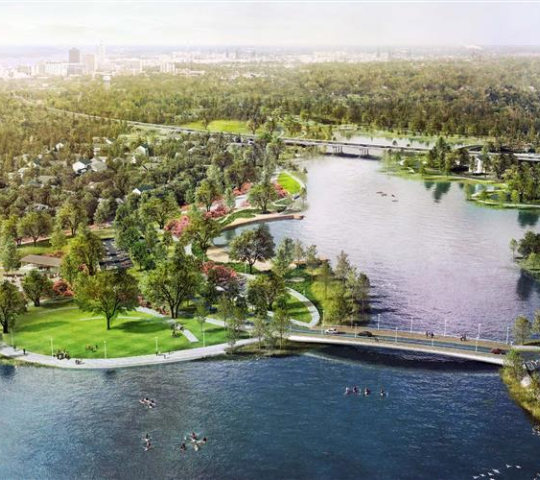
*Rendering courtesy of SWA Group and Jeffrey Carbo Landscape Architects, Baton Rouge Lakes Master Plan, 2016.*